
Defensible Space Compliant With State Law
California’s defensible-space standard addresses how vegetation and combustible material around a structure are managed. The measure “Defensible Space Compliant With State Law” is about carrying out the work required for the particular site, not clearing every plant or treating every parcel the same way. State law, local rules, property boundaries, and site conditions all matter. A property owner should confirm which requirements apply and keep a clear record of work completed.
What Defensible Space Means
Defensible space is the managed area around a building where vegetation and other combustible materials are arranged or removed to reduce potential fire exposure. It is a continuum, not a demand for a bare yard. How much vegetation is appropriate depends on distance from the structure, plant type, slope, local rules, and the specific parcel. The state measure concerns vegetation management within the legal standard; it does not by itself establish that any named contractor, neighborhood, or individual property has been inspected or found compliant.
CAL FIRE describes defensible space as a way to help address exposure from embers, flame, and radiant heat. Its public guidance calls for attention close to the structure and continuing fuel management outward, up to 100 feet or the property line, as applicable. Recommendations on a public guidance page and enforceable requirements in a statute are not interchangeable, so homeowners should check the text and local rules for their address.
California Rule: Public Resources Code Section 4291
California Public Resources Code Section 4291 establishes defensible-space duties for a person who owns, leases, controls, operates, or maintains a building or structure in the State Responsibility Area. The statute generally requires a 100-foot defensible-space area measured from each side, front, and rear of the structure, or to the property line where that boundary comes first. The law describes fuel management at different distances and calls out matters such as dead or dying vegetation, spacing, roof debris, and chimney clearance.
The statute does not grant permission to enter neighboring land. It says a person without a legal right to manage property beyond the person's own property is not required to do so, and fuel modification on adjacent property requires the adjacent landowner's written consent. Local laws may set more protective or specific standards. Parcel boundaries, local amendments, and the site’s location therefore need to be part of the work plan.
The Office of Administrative Law’s recent-actions page lists the Board’s 2026 emergency filing titled “Zone 0 Defensible Space” as withdrawn on September 8, 2026. As of October 21, 2026, statewide Zone 0 regulations remain proposed, not an operative statewide rule. The Board of Forestry’s status page does not give a final effective date. CAL FIRE’s five-foot-zone recommendations are guidance; local requirements may differ. Check the current statute and local authority’s rules before planning work.
Why the Work Matters
Wildfire can expose a building to windblown embers, direct flame, and radiant heat. Dry leaves in gutters, dead branches, and connected vegetation can add combustible material close to a structure or allow fire to move through a site. Managing fuel near buildings is one part of addressing those pathways, but it cannot control all conditions during a wildfire.
What the Work Can Include
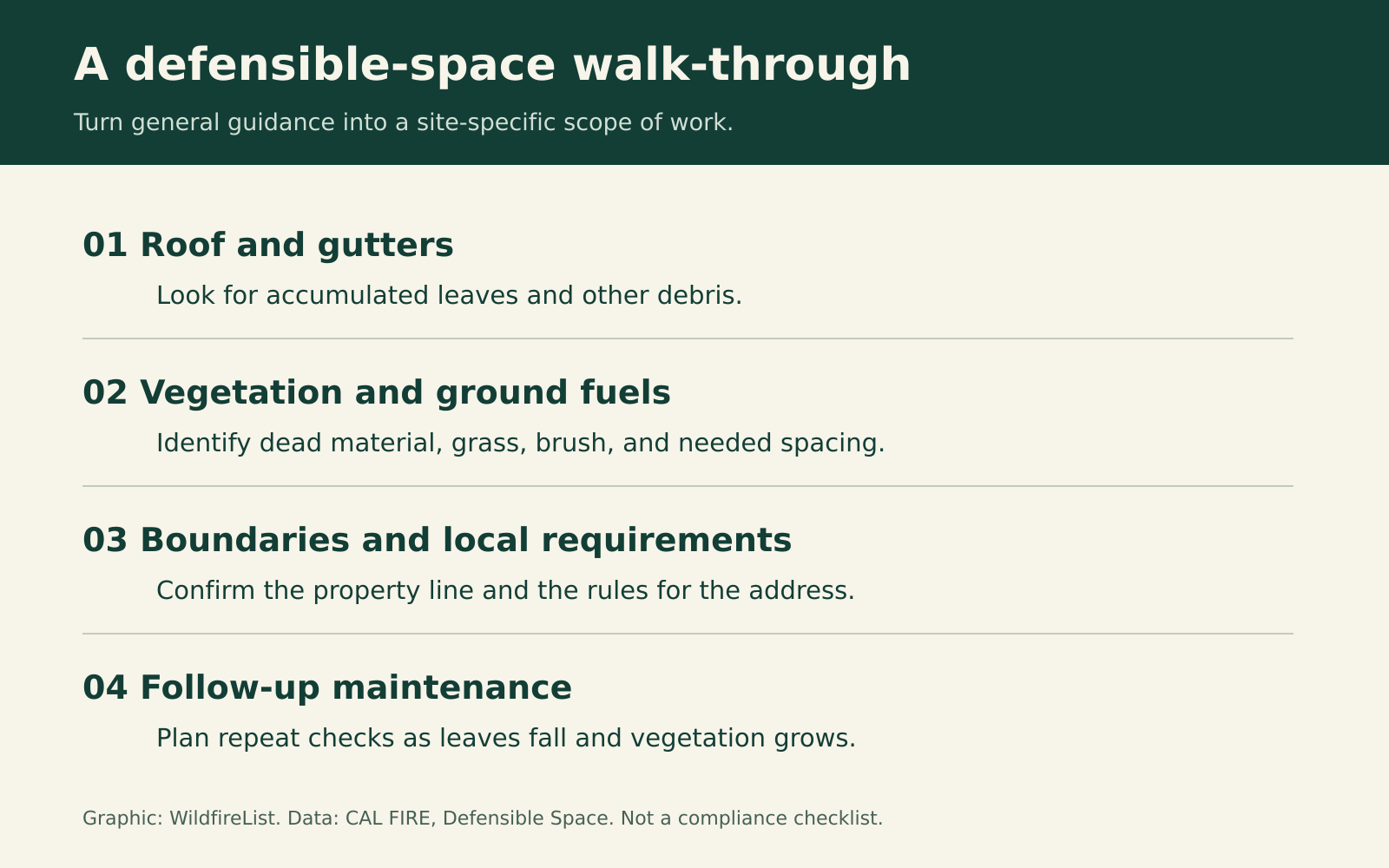
A defensible-space project usually begins with a walk-through, a map or sketch of the structure and parcel, and a discussion of the applicable jurisdictional requirements. Depending on the site and the written scope, work may include removing dead plants and dry debris, pruning or spacing vegetation, managing grass and brush, moving combustible items away from a building, clearing roof and gutter debris, or arranging for tree work by a professional tree service provider. CAL FIRE’s defensible-space guidance describes recommended actions and distances; the contractor should still verify the local standard for the address.
The scope should identify what will be removed, what will be pruned, how cut material will be handled, which trees require separate evaluation, and whether follow-up maintenance is included. A contractor should not promise legal compliance based only on a quick visual estimate. Ask for the measurements and boundary assumptions used, a before-and-after record, and a written note about any area the crew could not access. Never ask a crew to perform fuel modification on neighboring property without the owner’s written consent.
Timing and Questions to Ask
Ask the contractor to explain how vegetation density, slope, access, tree work, and debris removal affect the scope. Request a written crew plan, start date, disposal plan, and maintenance schedule rather than relying on a generic duration estimate.
Before hiring, ask: Which state and local rules did you use to prepare this scope? How are distances measured from the structure and property line? Which plants or trees are proposed for removal, and why? How will the work avoid damage to drainage, habitat, or neighboring property? What debris removal and documentation are included? Who should I contact if a local official requires a correction?
Where WildfireList Fits
WildfireList organizes mitigation providers by the work homeowners need. Browse WildfireList defensible-space providers to explore the service category, or browse the broader provider directory.
Call to Action
Browse the defensible-space category and use it to start a discussion about the scope for your address.
Sources
Your mitigation work may qualify you for wildfire discounts on your premium, but they aren't applied automatically. See How to Get Your Discounts